




From Static Demos to Immersive Results: VR for Product Showcases and Training
Static product demos drag out sales cycles and leave training gaps that cost time and money. Virtual reality product demonstrations break that cycle by turning passive viewers into active participants, speeding decisions and boosting retention. In this post, you’ll see how VR training for manufacturing and immersive sales demos connect with AI-driven ERP systems to streamline operations and prove ROI—helping your business scale with confidence. For more insights, check out this resource.
Harnessing VR for Product Showcases
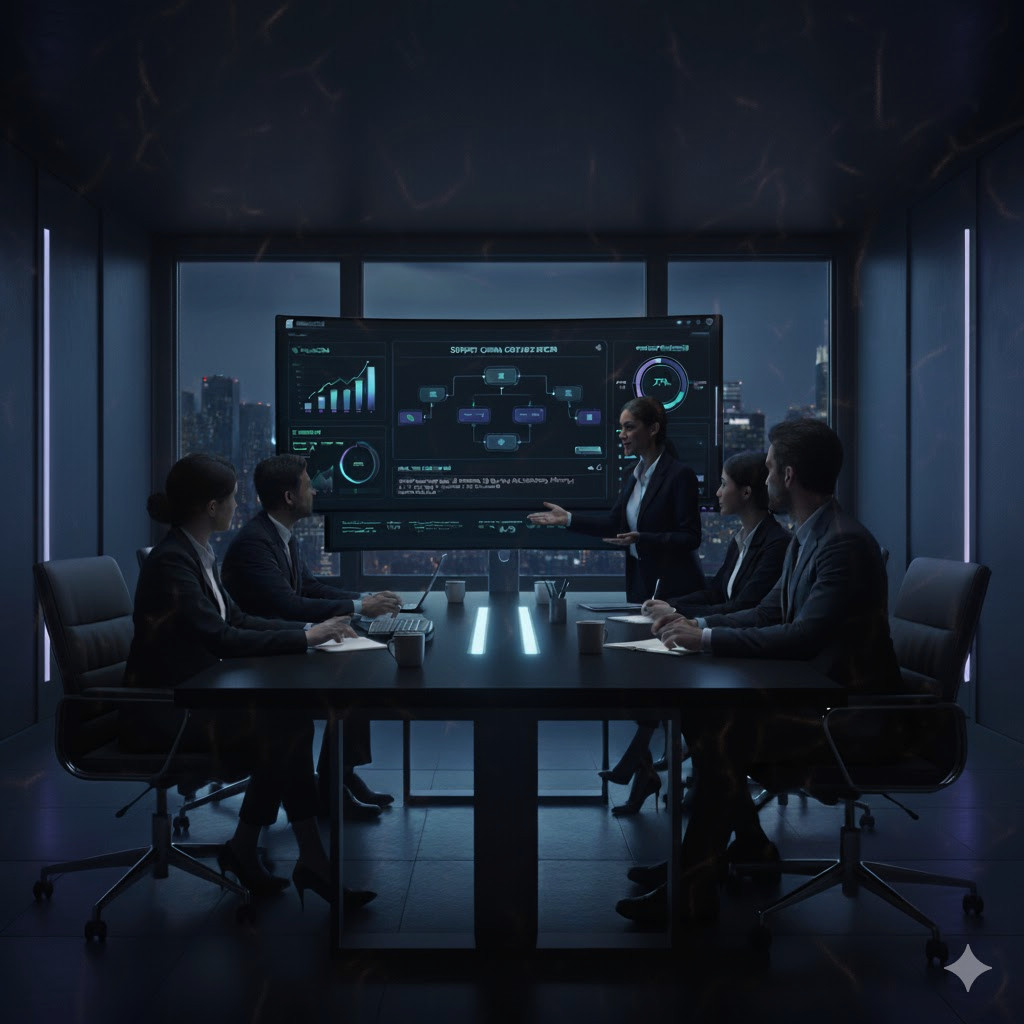
Imagine transforming your product demonstrations into unforgettable experiences that captivate your audience. Enter virtual reality product demonstrations. With VR, you can create interactive environments where potential customers engage directly with your product, leading to faster decision-making and deeper understanding.
Virtual Reality Product Demonstrations
When you invite your customers into a VR world, they don’t just see—they experience your product. This approach enables them to interact and explore features as if they were physically present. The benefits are clear: a 30% increase in engagement and quicker sales cycles. Whether you’re showcasing complex machinery or intricate software, VR transforms how your audience connects with your offerings.
Using VR technology, you break free from traditional boundaries. Potential buyers can explore and manipulate digital twins of your products, offering a hands-on feel without logistical constraints. This level of interaction not only showcases product features but also builds confidence in buying decisions. Learn more about implementing VR in sales.
Immersive Sales Demos and Engagement
Engage your prospects with immersive sales demos that capture attention and drive interaction. By integrating VR into your sales strategy, you can create memorable experiences that significantly impact buying decisions. This method isn’t just about showing; it’s about involving the customer in a story that they can relate to and remember.
Consider a scenario where a potential client steps into a VR presentation and finds themselves in a simulated environment tailored to their industry needs. They aren’t just observing; they’re part of the experience. This approach drastically improves information retention and can boost sales conversion rates by up to 20%. Explore how VR is reshaping sales engagements.
3D Product Configurator and Digital Twin
A 3D product configurator allows customers to visualize and customize products in real-time, enhancing their purchasing journey. Imagine offering a digital twin that reflects every product modification instantly. This tool not only personalizes the buying process but also reduces returns and increases customer satisfaction.
By using digital twins, businesses can provide a comprehensive view of their products, making complex information accessible and engaging. Customers appreciate the transparency and the ability to visualize custom solutions tailored to their preferences. This approach eliminates guesswork and builds customer trust, fostering long-term loyalty.
Enhancing Training with VR

Transitioning from product showcases to training, VR isn’t just a tool—it’s a game-changer. Incorporating VR into your training programs elevates the learning experience, ensuring higher retention and more efficient skill acquisition.
VR Training for Manufacturing
In manufacturing, VR offers immersive training experiences that prepare employees for real-world challenges. By simulating factory environments, workers can practice skills safely and gain confidence without risking costly mistakes on the job. This leads to a 40% reduction in training times and improved overall performance.
Through VR, learners can experience a range of scenarios, from operating machinery to solving complex problems. This hands-on approach promotes active learning and retention, translating to a more skilled and capable workforce. Implementing VR training not only enhances learning outcomes but also contributes to a safer and more efficient workplace. Discover more about VR training.
Shop Floor Training Simulations
Imagine training scenarios where employees can “walk” around a virtual shop floor, interacting with equipment and processes without any risks. Shop floor training simulations put learners in control, allowing them to explore and understand every aspect of their roles. This approach is especially beneficial in high-stakes environments where mistakes can be costly.
With VR, you can recreate any scenario, enabling employees to practice responses and decision-making in a controlled setting. This method accelerates learning and prepares workers for diverse challenges they might encounter, enhancing their readiness and confidence in real situations.
VR Onboarding and Remote Training Canada
For Canadian businesses, VR offers an innovative solution for onboarding and remote training. New hires can be introduced to company culture and processes through interactive VR experiences, making the transition smoother and more engaging.
Remote training becomes more effective with VR, bridging the gap between physical presence and virtual learning. Employees can participate in training sessions from anywhere, ensuring consistent education across locations. This flexibility supports workforce development and adaptation to new roles, crucial for scaling operations efficiently.
AI-Driven ERP and VR Integration

Integrating VR with AI-driven ERP systems can revolutionize your business operations. This combination offers real-time insights and predictive analytics, driving smarter decision-making and enhancing overall productivity.
ERP Integration with VR Solutions
By merging VR with ERP integration, businesses gain a powerful tool for managing operations. This synergy allows for seamless data flow and enhanced visualization of complex processes, leading to improved efficiency and greater strategic oversight.
Through integration, ERP systems can gather and analyze data from VR interactions, offering actionable insights that drive process optimization. This connection supports dynamic decision-making and enables businesses to respond swiftly to changes in the market.
Predictive Analytics and Real-Time Insights
The use of predictive analytics in conjunction with VR provides businesses with a competitive edge. By interpreting data from VR interactions, companies can anticipate trends and make informed decisions that align with strategic goals.
Real-time insights empower businesses to optimize processes and enhance customer experiences, ensuring they remain agile and responsive to market demands. This proactive approach helps maintain a strong market position and supports sustainable growth.
Cybersecurity for VR and Cloud Security Canada
As VR becomes integral to business operations, safeguarding data is paramount. Cybersecurity for VR and robust cloud security measures ensure that sensitive information remains protected, enabling businesses to leverage VR confidently.
Implementing comprehensive security protocols helps mitigate risks and secures the integrity of VR systems. This commitment to security fosters trust among stakeholders and supports the continued adoption of innovative technologies in business practices. Explore cloud security solutions.
In summary, virtual reality is transforming how businesses showcase products and train employees, while AI-driven ERP integration offers enhanced operational insights. By embracing these technologies, Canadian businesses can streamline processes, reduce costs, and drive growth with confidence.